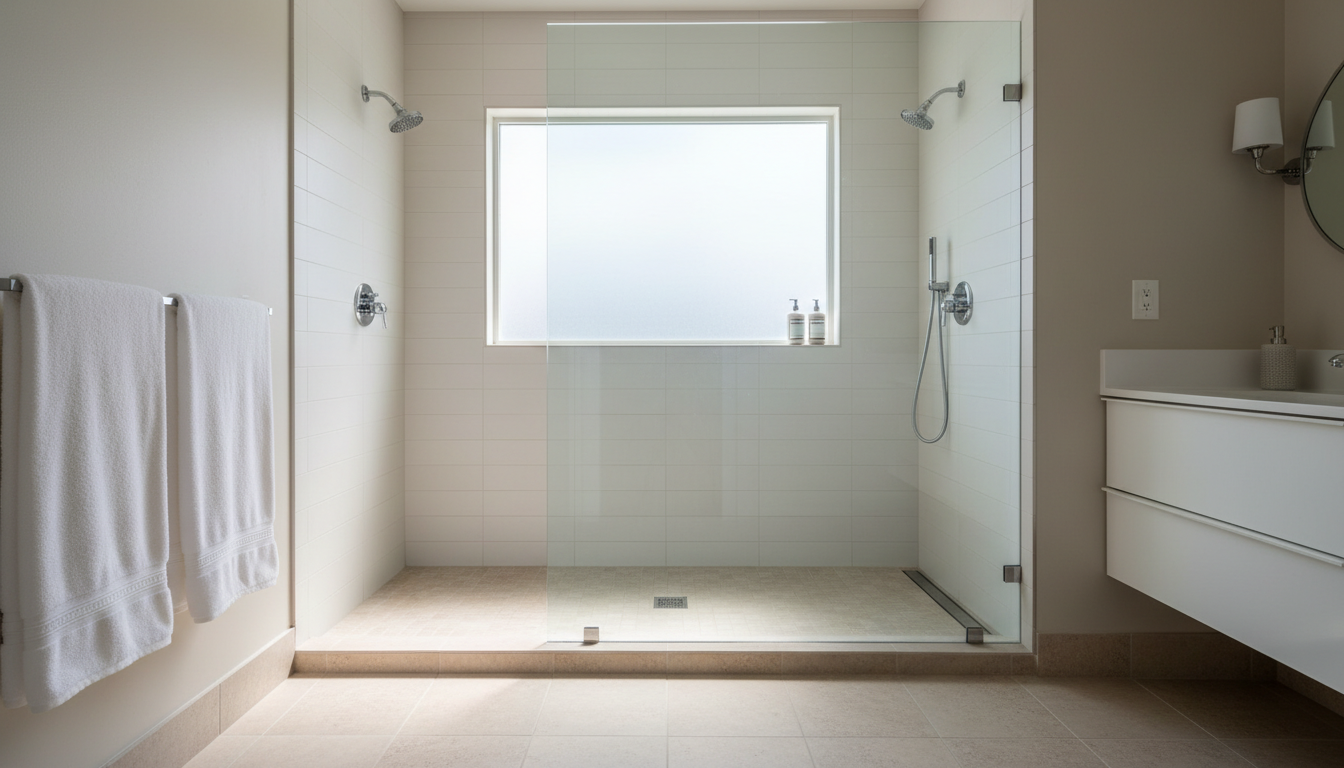
Sliding screens are best for compact bathrooms because they save space by operating on a track; conversely, hinged doors are ideal for larger layouts that can accommodate a swinging door. The choice between a sliding vs hinged shower screen ultimately depends on your available clearance, maintenance preferences, and whether you prefer a modern or traditional aesthetic.
Designing a Perth bathroom often feels like a puzzle, especially when you are caught between the elegance of a glass enclosure and the practical reality of limited floor space. Selecting the wrong door configuration can lead to cramped entryways, clashing fixtures, or constant water leakage issues that frustrate your daily routine. At AMAC Showerscreens & Robes, we believe that your choice should enhance both form and function without compromise. This guide provides a practical comparison between sliding and hinged shower screens; examining how each impacts your bathroom footprint and long-term maintenance. You will learn the specific advantages of space-saving sliders, the timeless appeal of pivot doors, and exactly which option delivers the best value for your unique layout. Whether you are renovating a master ensuite or a compact guest bath, we help you make an informed decision for a seamless finish.
The Great Debate: Choosing the Right Door for Your Perth Bathroom
Embarking on a bathroom renovation in Perth involves a series of critical decisions, but few impact your daily routine as much as the entry to your shower. While browsing design galleries can provide endless inspiration, the reality of your floor plan usually dictates the final choice. This is where the debate of a sliding vs hinged shower screen truly begins. The dimensions of your room, the proximity of the vanity, and even the placement of your towel rails play a decisive role in which configuration will serve you best over the long term.
At AMAC Showerscreens & Robes, we work with homeowners across the Perth metropolitan area to install custom shower screens that balance modern style with structural integrity. Our team sees both sliding and hinged systems in a variety of contexts, from compact apartment ensuites to sprawling master suites. In our experience, there is rarely a fundamentally bad product; instead, there is often a wrong fit for a specific space. A door that looks stunning in a showroom can become a practical nightmare if it obstructs your walkway or knocks against a toilet. Understanding these spatial dynamics is the first step toward a successful installation. If you are unsure which path to take, it helps to get a tailored quote to see how each option interacts with your unique layout.
Understanding Sliding Shower Screens: The Space Saving Champion
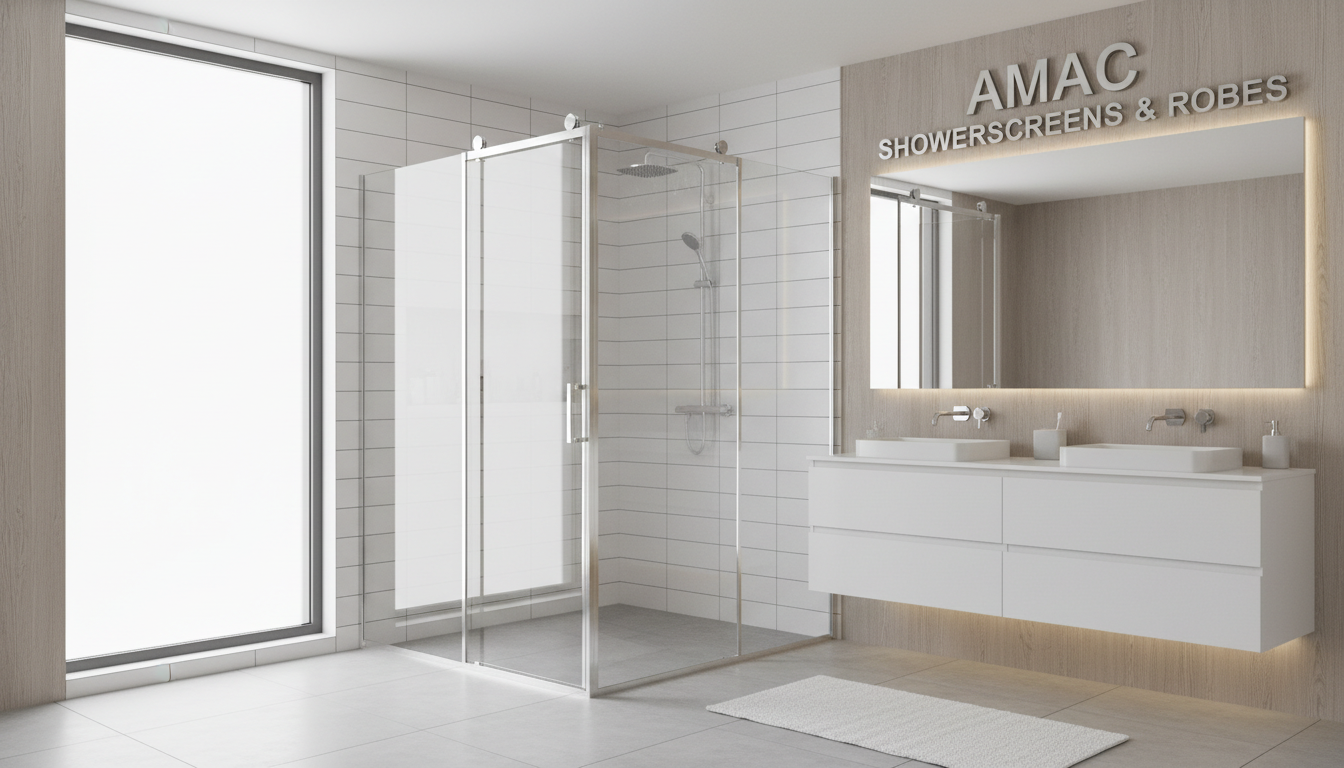
Modern sliding screens are the primary solution for bathrooms where every square centimeter of floor space is at a premium. Unlike traditional doors that pivot on a point, these systems glide horizontally within the shower's own footprint. This eliminates the need for swing clearance, a critical factor for many Perth homeowners dealing with compact ensuite layouts where a toilet or vanity is positioned just inches from the glass. By moving parallel to the fixed panels, the door never interferes with the rest of the room, allowing for a more flexible placement of fixtures.
The technology behind these screens has evolved significantly from the framed units of previous decades. Older designs relied on heavy, deep bottom tracks that were notorious for trapping soap scum, hair, and hard water minerals. In contrast, modern high-end installations often utilize top-hung roller systems. These systems suspend the weight of the glass from a robust upper rail, resulting in a much smoother, quieter operation. This shift in engineering also means the bottom of the screen can often be fitted with a low-profile guide rather than a bulky track, making the unit significantly easier to maintain and aesthetically lighter.
A technical detail unique to the sliding vs hinged shower screen comparison is the overlap area. This is the vertical section where the sliding panel and the fixed panel meet when the door is closed. Without expert calibration, this gap can be a source of annoying leaks during high-pressure showers. When we install custom shower screens, we pay particular attention to the seals and the alignment of these panels. We use high-quality, UV-resistant translucent seals that bridge the overlap, ensuring water stays inside the enclosure while maintaining the clean, minimalist look of the glass. This level of precision is what separates a professional installation from a generic kit, providing long-term reliability in busy Perth households.
Pros and Cons of Sliding Configurations
Evaluating the performance of sliding systems requires looking at how they impact the functionality of your bathroom on a daily basis. Many Perth homeowners frequently ask, "Are sliding shower screens good?" The short answer is yes, provided the hardware is professional grade. The durability of these units depends almost entirely on the quality of the rollers; high-grade stainless steel or nylon-encased bearings prevent the sticking and jumping common in cheaper, off-the-shelf kits.
Pros of Sliding Configurations
Space Efficiency: The primary advantage in the sliding vs hinged shower screen debate is that sliders require zero external clearance. This is a non-negotiable benefit for tight layouts where a swinging door would strike a vanity, towel rail, or toilet.
Superior Water Containment: Because the door stays within the footprint of the enclosure, water drips remain inside the shower tray or hob rather than splashing onto the bathroom floor during exit.
Modern Aesthetic: Slimline frames and top-hung rollers create a sleek, contemporary appearance that complements modern interior designs.
Cons of Sliding Configurations
Narrower Entry Width: A sliding system usually limits the entry point to roughly half the total span of the custom shower screens, which may feel restrictive in smaller enclosures.
Maintenance Requirements: Bottom tracks inevitably collect soap scum and hard water minerals. Even with modern designs, the overlap area where glass panels meet requires consistent attention to prevent grime buildup.
Choosing this style often comes down to the physical limitations of the room. To see how these factors apply to your renovation, you can get a tailored quote and speak with a specialist about your specific floor plan.
Exploring Hinged and Pivot Shower Screens: The Classic Aesthetic
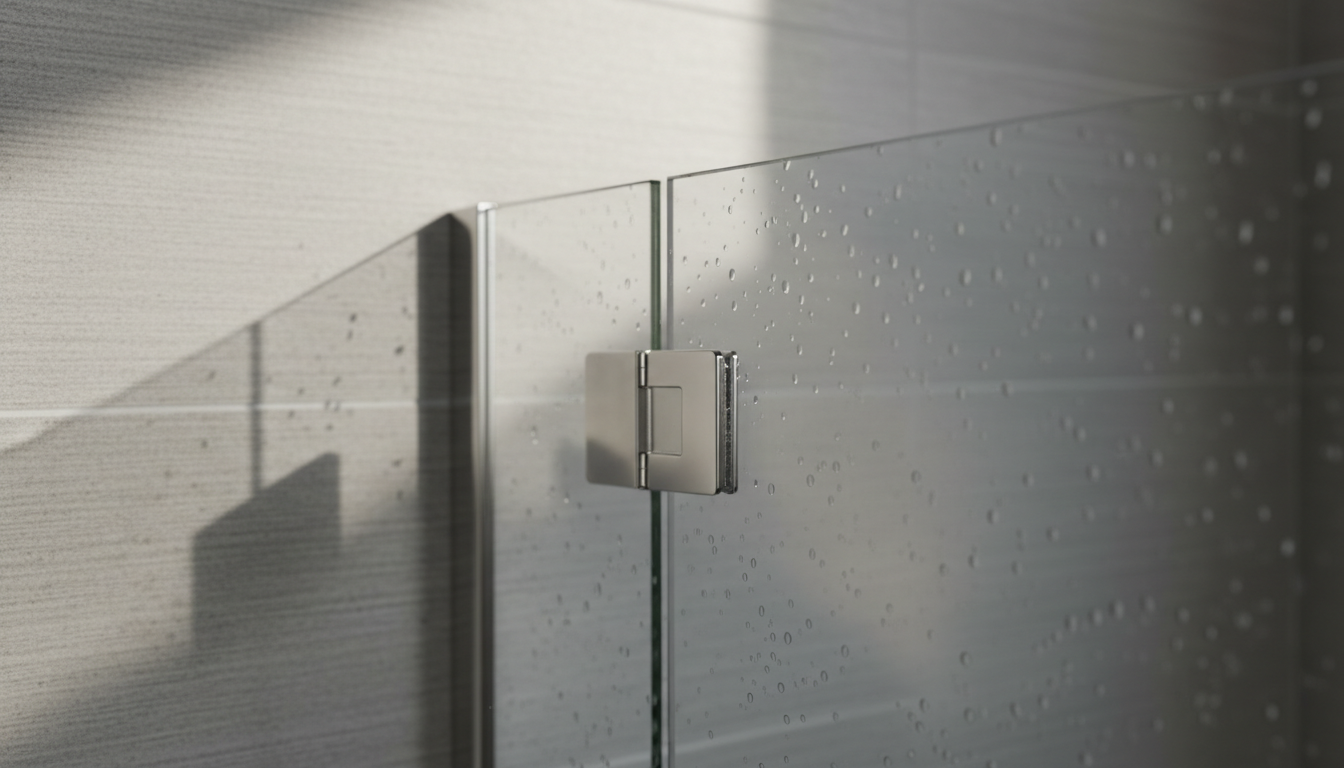
While sliding systems solve spatial puzzles, hinged and pivot doors are often the first choice for homeowners seeking a timeless, high end aesthetic. These configurations represent the traditional door movement but differ significantly in their mechanics. A standard hinged door uses hardware mounted directly to the wall or a fixed glass post, functioning much like a standard internal door. In contrast, a pivot door utilizes a pin system at the top and bottom of the glass. This pivot point is often set slightly inward from the frame, allowing the door to rotate rather than just swing, which can sometimes provide a cleaner look for specific frameless installations.
Frameless custom shower screens utilizing high quality hinges offer a level of sophistication that is hard to replicate. Without the visual clutter of metal tracks or frames, the focus remains on the clarity of the glass and the sleek finish of the hardware. Beyond the visuals, these doors provide the widest possible entry point to the shower. This is a vital consideration for family bathrooms or for households where accessibility is a priority. Because the door swings open completely, it eliminates the half-width entry restriction inherent to the sliding vs hinged shower screen debate, making it easier for larger family members or those with mobility aids to enter safely.
The trade-off for this luxury is the requirement for out-swing clearance. A hinged door must have enough unobstructed floor space to open at least 90 degrees without striking other fixtures. We find that precise measurement is essential during the planning phase. Even a few millimeters of miscalculation can result in a door that clips a towel rail, hits the corner of a vanity, or interferes with the bathroom door. When you get a tailored quote, we assess these swing arcs to ensure the layout remains functional and that the glass remains safe from impact.
Pros and Cons of Hinged Shower Screens
While the visual appeal of a hinged system is undeniable, its practicality depends on your specific bathroom habits and maintenance preferences. In the ongoing debate of a sliding vs hinged shower screen, the hinged option stands out for its longevity. With fewer moving mechanical parts than a roller system, there is less that can wear out or require replacement over time.
Pros of Hinged and Pivot Configurations
Maintenance Ease: The absence of floor tracks means there are no narrow channels to trap soap scum or grime. Wiping down a flat pane of glass and a couple of solid metal hinges is a straightforward task.
Maximum Accessibility: These doors offer the widest possible entry point, which is a significant advantage for custom shower screens in family homes where ease of access is a priority.
Timeless Sophistication: The clean lines and minimal hardware of a frameless hinged door provide a high end finish that rarely goes out of style.
Cons of Hinged and Pivot Configurations
Large Footprint: The door requires a clear arc of space to swing open, which can restrict the placement of other bathroom fixtures like vanities or toilets.
External Drip: When the door is opened after use, water clinging to the glass can drip onto the bathroom floor.
At AMAC, we mitigate the drip issue by using high quality, custom-fitted seals at the base of the door. Alternatively, installing the screen on a small hobb can create a physical barrier that keeps water contained. If you are concerned about how a swing arc might affect your layout, you can get a tailored quote to receive a professional assessment of your bathroom floor plan.
Matching Your Choice to Your Specific Bathroom Layout
Translating the technical pros and cons into a functional design requires a close look at the specific geometry of your room. In many Perth suburbs, we see a vast difference in architectural styles; from the compact heritage renovations in Subiaco to the expansive, modern coastal builds in Scarborough, each floor plan presents unique constraints that dictate the most functional choice for a sliding vs hinged shower screen.
Layout Type | Recommended Configuration | Primary Reasoning |
|---|---|---|
Small Apartment Ensuite | Sliding Screen | Zero swing clearance needed for tight spaces near toilets or vanities. |
Large Master Suite | Frameless Hinged | High end aesthetic that complements open plans and freestanding baths. |
Corner Shower Unit | Sliding (Usually) | Maximizes floor space in restricted corners where traffic flow is high. |
Wall-to-Wall Alcove | Pivot or Sliding | Flexible, depending on the proximity of the bathroom door or vanity. |
Scenario 1: The Small Apartment Ensuite In high density areas like East Perth or Subiaco, ensuites are often narrow and functional. If your toilet or vanity sits directly adjacent to the shower opening, a sliding screen is the logical choice. By opting for custom shower screens with a sliding mechanism, you avoid the risk of the glass striking porcelain or cabinetry. This configuration allows for a comfortable walkway even when the shower is being accessed, making the room feel less cluttered.
Scenario 2: The Large Master Suite with a Freestanding Bath If you are designing a generous master suite in a suburb like Scarborough, you likely have the luxury of floor space. In these layouts, a frameless hinged or pivot door provides a sophisticated finish that sliding systems struggle to match. A hinged door creates a seamless, glass-heavy look that complements other high end features like a freestanding bath. It also offers a wider entry point, which is more appropriate for a premium, spa-like environment.
Scenario 3: The Corner Shower Corner installations are a staple in many Perth homes. While a hinged door can work if the room is large enough, a sliding configuration is often the superior space saver in a corner. It keeps the footprint of the shower contained, preventing the door from swinging out into the main traffic path of the bathroom. If you are struggling to visualize how these options fit your specific floor plan, you can get a tailored quote to receive expert guidance on the best configuration for your home.
Maintenance and Longevity: Which Is Easier to Own?
The question of long-term ownership often centers on the effort required to keep the glass and hardware looking pristine. In the sliding vs hinged shower screen comparison, hinged doors are objectively easier to wipe down. Because they lack floor level tracks and complex overlapping hardware, you can reach every square inch of the glass with a squeegee in seconds. There are fewer crevices where moisture can sit, which naturally limits the growth of mold or mildew.
However, the traditional disadvantages of sliding shower doors regarding cleaning have been largely mitigated by modern hardware innovations. If you choose a system featuring quick release rollers, the bottom of the sliding panel can be unclipped from the track. This allows you to swing the door inward to access the glass overlap area, a task that was nearly impossible with older designs. At AMAC, we often recommend top-hung systems for our custom shower screens because they remove the heavy, dirt-trapping bottom track entirely, leaving only a small floor guide that is simple to scrub.
Perth homeowners must also account for the local water quality. Our region's hard water contains high levels of calcium and magnesium, which can lead to permanent etching on untreated glass. Regardless of the door mechanism, we suggest pairing your installation with an easy-clean glass treatment. These hydrophobic coatings act as a protective shield, causing water to bead and roll off; this significantly reduces the time spent cleaning. When you get a tailored quote, it is worth discussing these coatings to ensure your investment remains clear and functional for years to come.
Sliding vs Hinged Shower Screen Price and Value
Determining the final investment for your bathroom renovation involves weighing material costs against long-term functionality. In the sliding vs hinged shower screen debate, neither is inherently the budget option; instead, they allocate costs differently. Sliding systems often carry a higher price point for mechanical hardware. High quality stainless steel rollers and precision tracks are essential for a smooth glide, and these engineering components represent a significant portion of the total cost. Conversely, frameless hinged doors usually require 10mm toughened safety glass to maintain structural integrity without a frame. This thicker glass is heavier and more expensive than the 6mm or 8mm panels frequently used in framed or semi-framed sliding units.
Choosing custom shower screens over generic, flat-pack kits ensures a better return on investment for your Perth home. Off-the-shelf products rarely account for out-of-square walls or uneven floor levels, often leading to leaks and premature hardware failure. A professional installation from AMAC guarantees that every component is perfectly aligned, significantly reducing wear on hinges and rollers. To see how these variables impact your specific project, you can get a tailored quote and receive a breakdown based on your bathroom's unique dimensions and selected finishes.
Choosing between sliding and hinged shower screens depends on your specific space and personal style. While sliding doors save room in tight areas, hinged options offer a timeless feel for larger layouts. If you want expert help determining the best fit for your home, exploring our professional Services is a great next step. Our team can assess your bathroom and provide tailored recommendations that balance function and aesthetics, ensuring you make the right choice for your renovation project.